
Newsletter, September 2025
New books from Paul Lashmar and Miranda Kaufmann
So much has happened in the six months since we last wrote to you, our supporters, allies and friends. It’s hard not to be downhearted as the world turns even bleaker, but there’s much to keep our hopes up. Black History Month begins in a couple of weeks: a whole October of celebrations of people of African and Caribbean origins, their history and their achievements. Listed below are a few of the events in which our members and allies are involved.
There are worrying signs of retreat when it comes to racial justice in public and corporate life. What is your bank up to on this front? One achievement of recent years has been an acceptance that companies and institutions should be more diverse, fair and open when it comes to employing and encouraging people from minorities and disadvantaged groups. Research has consistently shown that companies with strong diversity programmes tend to be more productive and profitable, yet that progress is now under threat. Many well-known corporations are cancelling or scaling back their diversity, equality and inclusion programmes, following the lead of American counterparts such as Google, Amazon and McDonald’s in the wake of President Trump’s election. In March 2025, the Bank of England dropped diversity rules for financial services companies in the UK. High street banks including Lloyds, Barclays and HSBC have since followed suit.
What can we do? Tell our banks that we don’t agree – and threaten to withdraw our business. You could always use the Co-operative Bank, which has promised to stick by its promises on inclusion and positive employment practices. But keep an eye on it!
With thanks for your continuing interest and support,
Alex Renton
Heirs of Slavery Needs You!
Are you good with IT and data management? Do you have experience of using a customer relationship management (CRM) system? If so, we need your help!
Over the last two years we’ve been using a number of different platforms to communicate with our supporters, organise events and store data. It’s now time to consolidate and use a more professional customer relationship management (CRM) system so we can do those jobs more effectively. We’re looking for a volunteer who can help us identify suitable software, and then use it to manage our contacts database, send newsletters and mailings, and integrate with mainstream platforms such as Eventbrite. We know that some systems are more sophisticated – tracking interactions, managing donations and so on – and while we don’t need all those functions just yet, we may do in future.
If you (or someone you know) can advise us on what software to get but don’t necessarily want to manage it on an ongoing basis, we’d love to hear from you. Or you might prefer to manage it once it’s been set up by someone else. However you can help, please email us at contactus@heirsofslavery.org
Barings Bank, Slavery’s Bankers
Arina Zarei, a PhD candidate at the University of Leeds, is researching the slavery history of Barings Bank through a collaborative project funded by ING Bank and Barings Asset Management. Her work examines how the bank’s extensive archive reveals the entanglement of one of the City of London’s most powerful merchant houses with Atlantic slavery.
My research into the slavery history of Barings Bank began in 2022. It was the direct result of the Black Lives Matter protests which two years earlier forced institutions to confront their historic involvement in Atlantic slavery. Once one of the most powerful merchant banks in the world, with networks stretching out from the City of London to China and across the Atlantic to the Americas, Barings left an equally impressive legacy in the form of its archive. Today the Baring Archive is maintained by ING and is a registered charity whose goal is to ‘encourage [its] use as an educational resource.’
Barings’ archival heritage is a double-edged sword. While the wealth of records is a boon to research, it is also a challenge. How do we find traces of slavery among the thousands of documents that rarely mention the topic explicitly? It is worth considering that historically slavery was a routine and legal part of Barings’ business. After abolition, the importance of Britain’s trade in regions with slavery (the U.S., Cuba and Brazil) purposefully blurred its legal boundaries. Barings as an institution held a firmly laissez-faire attitude to trade and were vocal opponents of abolitionism. While there was no reason for Barings to hide or obscure their ties, society largely utilised euphemistic language like the ‘West India trade’ or ‘sugar estates’ rather than ‘slave trade’ or ‘slave plantations’, to create distance from the harsh realities of slavery.
Further, like all archives, the Baring Archive is a multi-layered construct. The partners and their agents generated documents as a part of their business, and in collaboration with their staff shaped the boundaries into which they were placed. In 1963 future archivist Tom Ingram was hired to index these records into the catalogue which constitutes the main roadmap to the Archive. The omission of references to slavery reflected the lack of interest in the topic in contemporary society. Since then, however, archivists and researchers have built upon this work to uncover important links to slavery, such as Barings’ role in the cotton trade of the antebellum United States.
My approach embraces these challenges by centering the Archive as a distinct creation and simultaneously placing it within its historical, social and political contexts. I have established the relative importance of slave-produced commodities by searching the Archive and its catalogues for ‘sugar’ as a key term in combination with ledger entries from the sugar-producing regions of the Caribbean. This was then cross-referenced with the correspondence between Barings and their clients in these areas. An example of this is the firm’s ownership of hundreds of enslaved workers through their involvement in the sugar economy of Danish St Croix, a link they maintained beyond abolition in the British Empire. Thus, by using Barings’ own words, we can begin to emphasise the importance of slavery to their reputation as one of the most powerful merchant banks in history.
Histories that Shape Today
Dr Cassandra Gooptar is a Trinidadian scholar-activist and Lecturer at the Wilberforce Institute, University of Hull, whose work explores the legacies of slavery and indenture in the Caribbean.
As a descendant of Indian indentured labourers who were brought to the West Indies to replace enslaved people on the plantations, my research resonates deeply with me, both personally and professionally.
Right now, I am developing a project that will explore the history of plantations in Trinidad & Tobago and Guyana through the lenses of archaeological memory and restorative justice. We will ask: Who were the enslavers linked to these islands? Who were the enslaved people connected to these plantations? And how do their stories continue to shape our present?
The project will be rooted in collaboration with local organisations, including the National Archives of Trinidad & Tobago, the Emancipation Support Committee, the National Council for Indian Culture and the University of the West Indies – ensuring that descendant communities are at the heart of the work. Our aim is to create accessible teaching resources for secondary school students, such as a companion book and accessible digitised resources (data visualisation, maps, teacher tool kits etc) so that young people can gain a deeper understanding of the history of their island.
This is about more than the past: the sugarcane fields that still line our highways, the plantation names embedded in our towns, and the ‘creole’ English we speak are daily reminders of the legacies of slavery and colonialism. This project seeks to acknowledge those legacies with honesty, and to help ground restorative justice in truth-telling and community involvement.
If you're interested in funding part of the project, or perhaps supporting it in another way, do please contact me via this form.
The Countryside for Everyone
The University of Leicester, with funding from the Leverhulme Trust, has been investigating racism in rural Britain, hoping to ‘reveal the ways rural racism is expressed and experienced in order to enable everyone to enjoy rural life free from harassment and hostility’.
The two-year study has involved forty researchers from ethnic minority backgrounds, based in villages and towns across the UK. Drawing on their direct experiences of racism, these partners have produced stories, photographs, poems and more, all to construct a more inclusive narrative about life in rural communities, from market towns to remote hamlets and seaside resorts. This month the researchers published a fascinating and disturbing report.
Rural Racism: Towards an Inclusive Countryside is led by Professor Neil Chakraborti, director of Leicester’s Centre for Hate Studies, working alongside Dr Amy Clarke and Professor Corinne Fowler. Merely undertaking research in this area can itself provoke backlash – some academics working on the study reported abuse and threats online and in the media. The report’s conclusion is of a complex mix of feelings among its ethnic minority researchers: ‘a longing for peace and belonging; a deep respect for the countryside and the beauty of rural space; but at the same time a common experience of conscious and unconscious racial stereotyping, exclusionary behaviours and open hostility.’
A series of webinars in September will present findings from the project and provide opportunities to hear from the team and guest speakers – you can register here. Project outputs include reportsdetailing the scale and impact of rural racism, and a shortfilm produced by Feel Good Films featuring participants’ testimonies.
Wales, Keep Going!
Rosemary Harrison, a founder member of Heirs of Slavery, is calling upon ‘heirs’ or supporters who live in Wales to join her campaign to encourage the Senedd and Cardiff City Council to continue on the journeys of healing and repair that they began in 2020.
Back in 2020, having learnt a few years earlier that our fourth great-grandfather, Thomas Harrison, was a lawyer and an enslaver in Jamaica, my family started on a journey of repair which led some of us to visit the island in 2023. Our knowledgeable and welcoming guide at the National Museum of Jamaica laughed when we said we were from Wales – explaining that in Jamaica the best-known Welshman is the notorious Henry Morgan of ‘Captain Morgan’ rum fame.
‘Harri’ Morgan was born in about 1635, and grew up in Llanrumney near Cardiff. He went on to become a privateer, amassing enough wealth to buy three large sugar plantations in Jamaica. He was appointed Lieutenant Governor of Jamaica, leading three brutal military campaigns against the Jamaican Maroons. By the time of his death in 1688, Morgan ‘owned title’ to 131 enslaved Africans valued at £1,923. Azuka Oforka’s award-winning play The Women ofLlanrumney, which premiered at Cardiff’s Sherman Theatre in 2024, is set in 1765 on the Morgan family’s Llanrumney plantation in Saint Mary Parish, Jamaica. The play, which has had rave reviews, puts Wales’s role in enslavement centre stage.
As a citizen of Wales I was proud when, in 2020, the Welsh government commissioned an audit of the nation’s involvement in enslavement, and Cardiff Council set up a ‘Race Equality Task Force’. Now I am searching for allies to join me in calling upon the government and council to continue on their journeys of healing and repair, and in encouraging Senedd members and county councillors to consider issuing a full and formal apology (as per the first point of the CARICOM’s Ten Point Plan) to the people of Jamaica and the Jamaican diaspora in Wales for the crime against humanity of chattel enslavement committed by Henry Morgan and many others.
Please contact me if you are interested in pursuing this campaign – I can be reached at rosemary.meck@gmail.com
Recording, Reclaiming, Repairing
Stephen Lewis, born in London and raised in Chesterfield to parents from Grenada’s Windrush Generation, has devoted his retirement to uncovering the island’s past. As a leader of the popular Grenada Genealogical and Historical Society, he is now launching ‘Depths of Paradise’, a project that confronts Grenada’s history of slavery by restoring the lives and identities of the enslaved to the record alongside those who claimed compensation at abolition.
Grenada is often imagined as a paradise of beaches, sunshine and lush hillsides. Yet for thousands of enslaved people held in bondage on its estates, it was also a place of unimaginable suffering. ‘Depths of Paradise’ is a heritage and digital humanities project designed to hold those two truths together by documenting both the estate claimants who received compensation at abolition in 1833–34, and the enslaved people whose lives and labour were the foundation of that wealth.
Unlike previous projects which have focused primarily on absentee owners in Britain, ‘Depths of Paradise’ looks closely at Grenada itself. It will systematically pair all 1,061 compensation claimants with the enslaved people recorded in the Slave Registers, building biographical profiles at the level of each estate. In doing so, it will bring into focus not only the powerful but also the lives, names and family groupings of those enslaved – and, where possible, trace those connections into the present day.
The project will have three main outputs. First, a free, interactive digital archive, accessible worldwide. Second, a book highlighting the most compelling human stories to emerge from the research. And third, a reparative model where a percentage of book profits will support cultural and educational initiatives in Grenada.
This is an ambitious undertaking, requiring 18 months of research, a new website, and significant outreach. The estimated budget is £77,000, with applications being made to UK-based funders such as the National Lottery, as well as to universities and members of the Grenadian diaspora. Endorsements and practical help, however, will be just as vital as funding. They show potential backers that this work has wide support, add credibility and help build momentum.
Support could take many forms: financial contributions, pro bono assistance (such as website or archive expertise), introductions to others who may be able to help, or endorsements of the project’s goals. All supporters will be acknowledged on the website and in the book.
At its heart, ‘Depths of Paradise’ is about reclaiming erased histories, reconnecting descendants with their ancestors, and ensuring that Grenada’s stories are preserved and placed at the centre of the global narrative of slavery and emancipation. Anyone interested in offering support or finding out more is warmly invited to get in touch with me at sirlewis_@hotmail.com
Two new books...
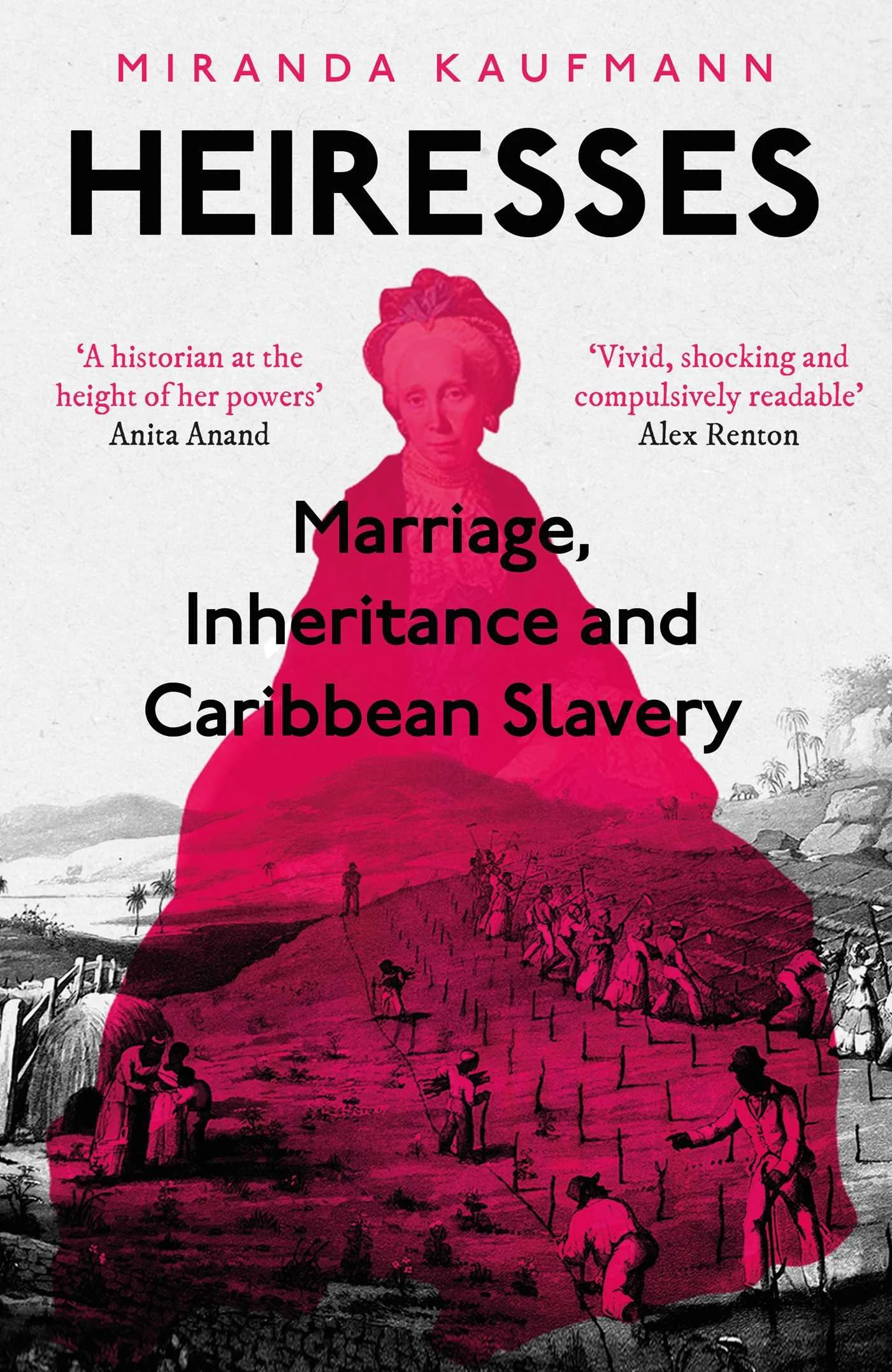
‘Meet the heiresses. Their dresses are the latest fashion, their rooms Mayfair’s most luxurious, their suitors Britain’s most powerful men. Their fortunes – blood and sugar.’ In Heiresses: Marriage, Inheritance and Caribbean Slavery (Oneworld, September 2025), the historian Miranda Kaufmann traces the lives of nine women whose wealth derived from Caribbean plantations, showing how slavery enriched female inheritors and reshaped British society. Following her acclaimed Black Tudors, Kaufmann uncovers a hidden history of inheritance, exploitation and legacy that continues to reverberate today.
‘Reparations are the only way to address racism.’ In The Big Payback: The Case for Reparations for Slavery and How They Would Work (Faber, October 2025) the actor-comedian Sir Lenny Henry and journalist Marcus Snyder confront the fact that when Britain abolished the slave trade, it paid substantial compensation to slave-owners from public funds – a debt finally cleared by British taxpayers in 2015 – while those enslaved and their descendants received nothing. Henry and Snyder ask why the legacy of this unequal settlement persists, and lay out what reparations could look like in practice.
Heirs of Slavery online workshops...
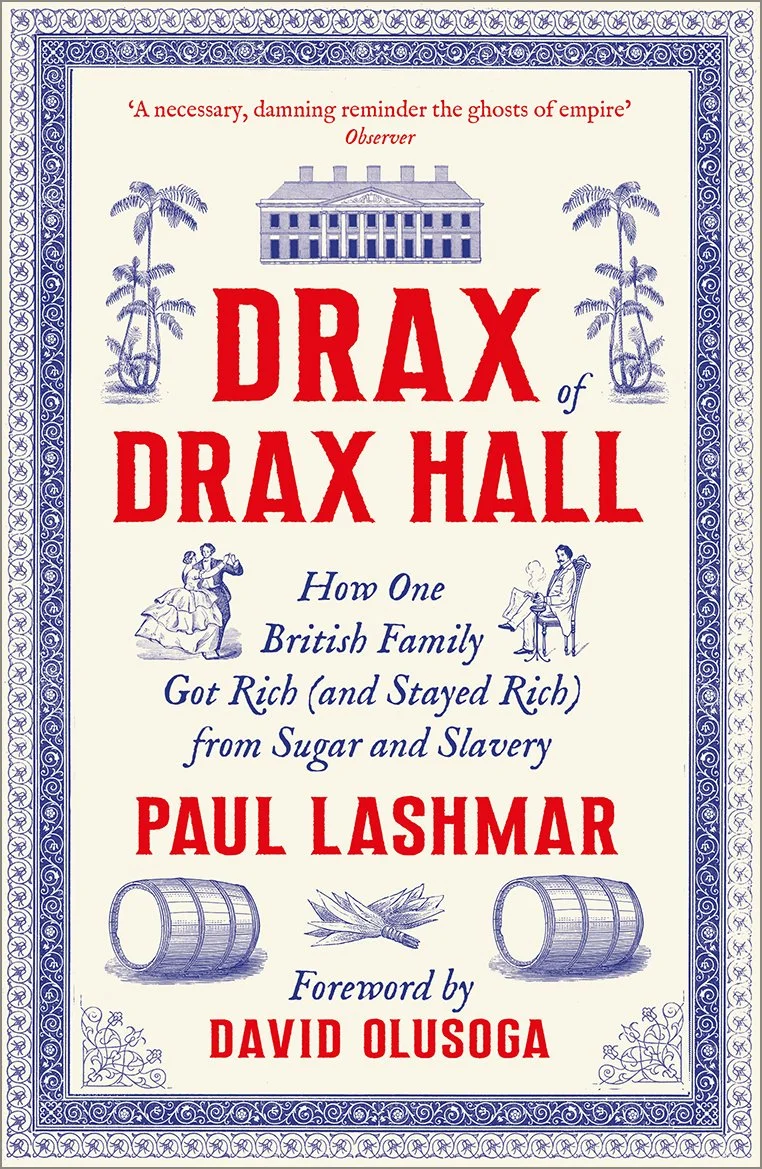
On Monday 6th October, at 7.30pm, we will be talking with the investigative journalist Paul Lashmar about his recent book Drax of Drax Hall. This tells the extraordinary history of the Plunkett-Erne-Erle-Drax family of Dorset and Barbados, and their role in colonial and domestic exploitation. The key Drax ancestor helped start the first sugar plantations in the Caribbean, using enslaved Africans as labour, in the seventeenth century, making the first of several fortunes for his ancestors. Richard Drax, the former MP, still owns Drax Hall on Barbados and the ancestral estate in Dorset. Paul will be joined by a colleague from Barbados. Please register for this Zoom event by emailing contactus@heirsofslavery.org
On Monday 3rd November, at 7.30pm, author Michael Banner and activist Patrick Vernon will join us to discuss their work and how to further reparations and repair. Michael is a theologian and dean of Trinity College, Cambridge: his book Britain's Slavery Debt: Reparations Now made headlines last year for its 'heartfelt and trenchant' (TLS) explanation of why Britain must address this unique wrong. Patrick is a campaigner and cultural historian, working on health and mental health inequalities, migration and other issues arising from systemic racism. Please register by emailing contactus@heirsofslavery.org
On Monday 1st December, at 7.30pm, Heirs workshop regulars Jacqueline McKenzie and James Dawkins will be discussing the future of the reparations movement as we look towards 2033 and the bicentenary of the abolition of slavery. Jacqueline is a leading lawyer with the firm Leigh Day, deeply involved in the Windrush compensation claims and discussions about reparations both national and international. James Dawkins is a historian of enslavement and related issues who has worked with UCL's Legacies of British Slavery project and on efforts towards institutional repair and acknowledgement. Please register by emailing contactus@heirsofslavery.org
Looking forwards...
On Thursday 25th September, the African Caribbean Sustainability & Investment Summit (ACSIS) will host the inaugural World Reparations Conference at the House of Lords in London, convening policymakers, faith leaders and campaigners to consider strategies for reparative justice. Speakers will include Professor Robert Beckford and Esther Xosei. Heirs of Slavery is honoured to have been asked to represent the perspective of descendants of enslavers. The event will include a panel moderated by Heirs co-founder John Dower, with contributions from James Christie-Miller, a descendant of the MacBarnett family who owned plantations on St Vincent and Grenada, Paul Lashmar, the author of a book about the Drax family and its business dealings on Barbados, and Catarina Demony, a Portuguese journalist and heir who was on a panel at our own 2023 conference. For further details and registration, please click here.
On Wednesday 1st October, at 7.00pm, the premiere of Rivers of Repair will take place at St Pancras New Church, London NW1 2BA. This live event brings together descendants of enslaved people and enslavers in a candid appraisal of Britain’s role in the Caribbean. Through spoken word, history, gospel music and personal testimony, it explores the impact of empire and the ongoing legacy of colonialism, calling for acknowledgement, reconciliation and reparative justice. Written by gospel singer Tracey Jane Campbell with John Dower and Miko Giedroyć, the piece will be performed by the Soul Sanctuary Gospel Choir, narrated by Bishop Rosemarie Mallett, and feature contributions from Linda Reid, the Rev Leon Dundas and several Heirs of Slavery co-founders. Admission is free but tickets must be reserved in advance here. Donations on the night will support the Black Curriculum.
On Thursday 2 October, at 7.00pm, the international criminal law expert Professor Patricia Viseur Sellers will give this year's Memorial2007 lecture, titled 'Missing in Action: the international crime of the slave trade' at the University of London, Senate House, Malet St WC1. Hosted by the Institute of Commonwealth Studies. Introduced by Oku Epenyon, the lecture will be followed by Q&A and refreshments. Sign up here .
On Friday 3rd October, at 2pm, Heirs of Slavery co-founder Alex Renton and the curator and artist Dr Cat Dunn will be in conversation at the City Art Centre, Edinburgh as part of Black History Month Scotland. Their discussion, Slavery, Scotland and Inheritance, will explore the legacy of slavery compensation in Britain following abolition in 1834, when enslavers received payment for the loss of their ‘property’ while the formerly enslaved received nothing. (Renton’s own family were among those compensated.) The event will consider what this inheritance means for Scotland today – for its institutions, stories, art and future. Free event, register here.
On Thursday 9th October, at 7.30pm, Ashburton Arts Centre in Devon will be hosting a performance of Stolen from God, a song cycle by the singer-songwriter Reg Meuross, presented with his trio and narrated by Lucy MacKeith. The work, described by the Guardian as ‘ambitious, often unsettling’, examines England’s role in the transatlantic slave trade through original songs and narration. Drawing on historical research, and blending English folk and West African traditions, it invites reflection on a past too often hidden, offering ‘truth, beauty, and connection in equal measure’. For tickets and further information, please see Ashburton Arts Centre’s website.
On Saturday 18th October, the All-Party Parliamentary Group for Afrikan Reparations holds the UK Reparations Conference at Friends House, Euston. Register here.
Notice board...
The Repair Campaign is inviting signatures in support of its goal to gather 100,000 signatures by Sunday 12th October – International Day for Reparations. Guided by CARICOM’s Ten-Point Plan for Reparatory Justice, the campaign calls on the UK and other European governments and institutions to apologise for historic crimes and to commit to intergenerational reparatory justice. By signing the petition, supporters help amplify the message that meaningful repair is both a moral duty and a practical necessity. The deadline of 12th October marks an important moment to gather widespread backing and demonstrate the growing international support for reparations. To read more, and add your name, click here.
You can follow what we're up to and what we're talking about on Instagram and BlueSky
Want to join us? Tell us something? Get in touch via the Heirs of Slavery website or contactus@heirsofslavery.org