
Let’s start with some important advances you may have missed in 2026:
In March, a historic resolution was adopted by the United Nations General Assembly declaring the trans Atlantic trade in enslaved Africans to be the gravest crime against humanity. There were 52 abstentions (including by the UK) and votes against from the United States, Israel, and Argentina.
In May, Pope Leo XIV made a historic apology for the Vatican’s role legitimising slavery, calling it a “wound in Christian memory. Past popes have apologized for Christians’ involvement in the trans-Atlantic slave trade, but this apology is unprecedented. Pope Leo, who was born in Chicago, said that his maternal ancestors were both “slaves and slave owners,” with ties in New Orleans, USA.

In September, a Jamaican government delegation visited the UK to petition the King Charles over reparations for slavery. Heirs of Slavery met with the delegation (See more below).
Our Upcoming Programming: THE CROWN AND REPARATORY JUSTICE.
Monday, November 16th 19.30 - 21.00 pm (GMT)
Tickets are free. Please book in advance:
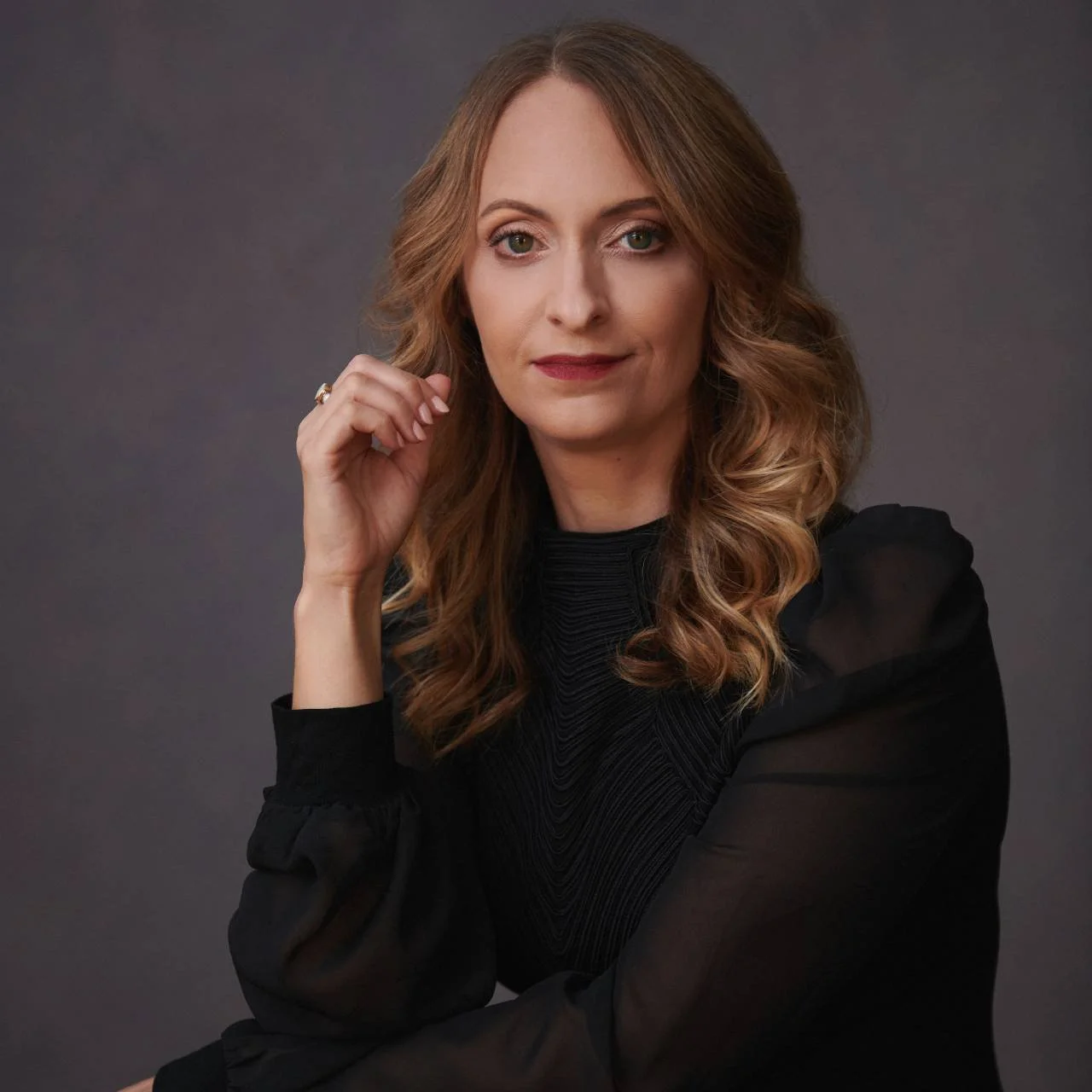
Professor Brooke Newman, author of The Crown's Silence, a hidden history of the British monarchy and slavery in the Americas. Newman teaches at Virginia Commonwealth University. She is an award-winning historian of enslavement and colonialism, whose new book has been called 'comprehensive and penetrating... a probing investigation [which] will prove essential to future discussion.'
Scroll on for a review of Newman’s book.
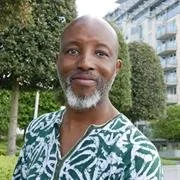
Dr. Toyin Agbetu is a social rights activist, community educator and film maker. In 2007, Agbetu famously made a nonviolent protest at a ceremony in Westminster Abbey to mark the anniversary of the abolition of the British slave trade, saying to the Queen that she should apologise and make reparations. He is now a lecturer in anthropology, and is interested in institutional activism, decoloniality, and community resistance
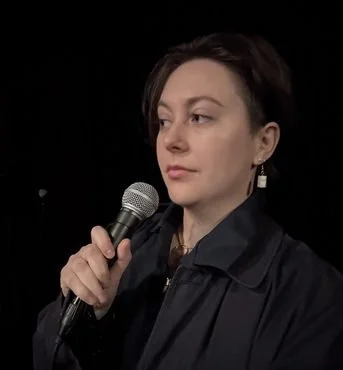
Heirs of Slavery member, Eliza Lambert, is tracking down her Angolan ancestors and tallying up their crimes against humanity. She’s not done yet, but confirms her ancestors trafficked over 1% of all people during the trans Atlantic slave trade.
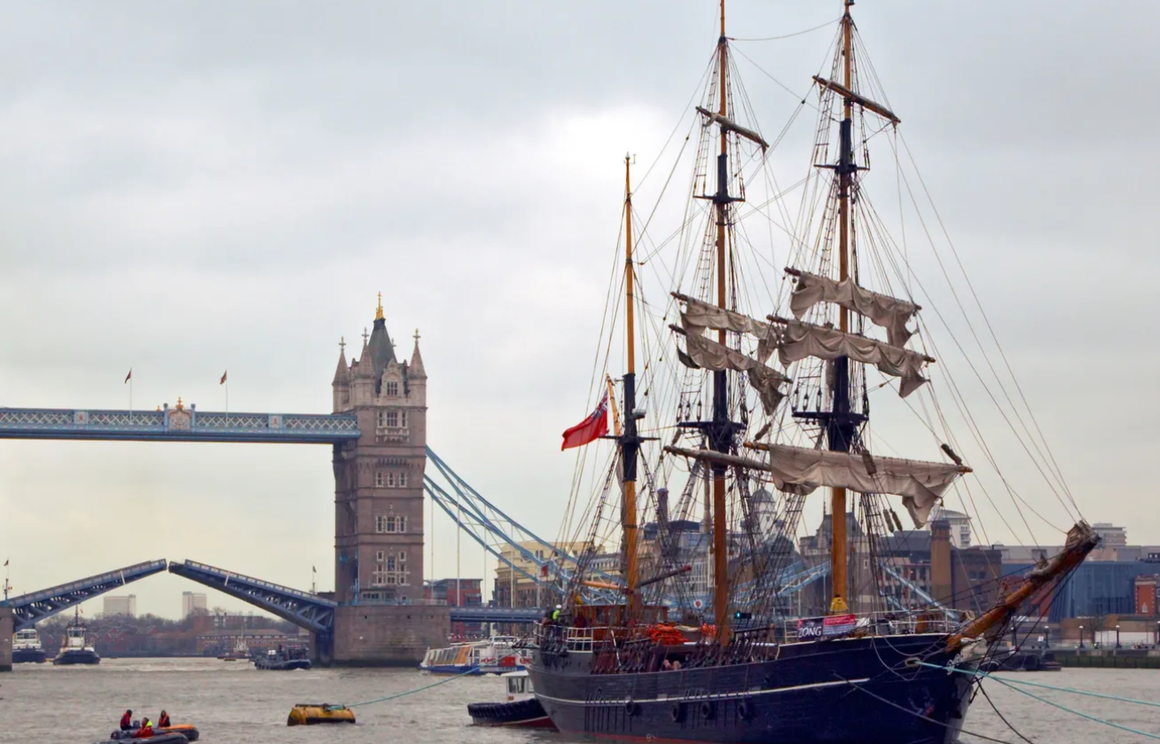
During their visit the Jamaican delegation had a schedule of official parliamentary, diplomatic, and media events. Members also attended a church service and a Radical Justice Advocacy Forum; then discussing repatriation of Jamaican cultural property with the British Museum. They also visited sites relevant to Jamaican and Caribbean history and culture in Brixton.
On September 10, the delegation also met with Heirs of Slavery. The meeting was attended by the Grange, Alexander Williams (Jamaica’s High Commissioner) to the UK, an members of the NCR delegation. Heirs of Slavery opened the meeting by underlining their commitment to supporting “real material restitution” and explaining that they were there to listen.
Olivia Grange, addressing the table as the meeting started, said, “It is a great reflection of how there is hope, all of us sat together at this table.” Of Jamaica”s petition to the King, Grange said: “Our move is timely… I think that as we move through generations the barriers are being broken down. Because of my personal faith in human beings, I have this feeling that right now [King Charles] is thinking.”
However, the delegation and the High Commissioner also pointed to the barriers that still exist. Of the reaction in the media to the delegation’s arrival, a delegate reminded the meeting: “Lord Sumption [a historian and former judge] said on BBC Radio 4 that our petition was ‘nonsense’ and that we are exploiting British guilt… The reaction to this cause is fear.”
The delegation asked Heirs of Slavery to give a public statement in support of the petition, and to take part in interviews for Jamaican broadcasters. “Your faces will help to show people that we are not trying to exploit British guilt. England is not going to crash and burn; it did not crash and burn when it paid 40% of its expenditure to enslavers in 1834.”
Laleta Mattis-Davis, Chair of the NCR, said: “We want to build something that younger generations can continue, we do not want to buy computers that then become obsolete.” Mattis-Davis said this intergenerational construction of a reparatory movement should be the work of both Britain and the Caribbean nations: “In 100 years, we should be able to say: ‘this was our contribution’. And [Britain] should be able to say what was theirs.”
Mattis-Davis explained that Heirs members can support reparatory justice using their professions and the resources available to them as heirs of slavery. Previously, descendants of enslavers have provided historical records – documenting the names of the Africans that their ancestors enslaved – to initiatives aiming to restitute these stolen identities to African descended communities.
Williams suggested that Heirs could participate creating public education sites, for example, the renovation of ruined plantation. Mattis-Davis closed the meeting by proposing that HoS and the NCR continue communications with the aim of deciding two projects to collaborate on. She defined these as projects that should be both intergenerational and replicable by other organisations. At the end of the meeting both parties agreed to sustain more regular communications for the purpose of furthering these collaborative projects.” - reported by Claudio Mecklenburgh.
Good news! The King referred the Jamaican Delegation’s petition to the JCPC.
A memorial in Nantes
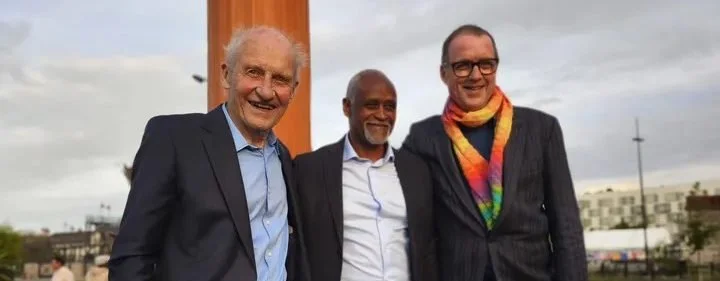
From left to right: Pierre Guillon de Prince, Dieudonné Boutrin, and John Dower.
In April, John Dower, co-founder of Heirs of Slavery, attended the unveiling of La Coque Nomade’s Mast of Fraternity in Western France. La Coque Nomade is a sister organisation to Heirs of Slavery and represents both descendants of enslavers and the enslaved. Their founder is Dieudonné Boutrin, activist and descendant of enslaved people in Martinique.There, John witnessed the apology of Pierre Guillon de Prince, the first person in France to formally apologise for his family’s links to the trans Atlantic trafficking of African people. Pierre’s shipping ancestors transported kidnapped Africans from Nantes, France’s largest port during the slave trade. He told Radio France International, "If communities are to come together, then it’s for the descendants of the executioners to make the first gesture, not the descendants of the victims."
The French president Emanuel Macron was listening because in May, he spoke of the need for “reparations” at a commemoration marking the 25th anniversary of the Taubira law – which recognised the transatlantic trafficking of African People and slavery as “crimes against humanity”. We hope these words become actions.
REPARATIONS IN MAURITIUS
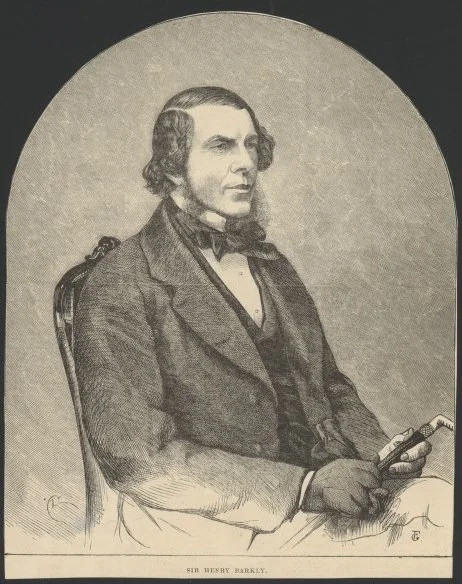
On August 1st, Heirs of Slavery member Dr. Alison Dow spoke at the First International Conference on Reparatory Justice in the Indian Ocean nation of Mauritius, apologising for her ancestors’ crimes against local enslaved peoples.
Alison is a descendant of a previous colonial governor, Sir Henry Barkly. Sir Barkly was also the governor of Guyana, Jamaica, Australia, Victoria, and South Africa’s Cape Colony (now Cape Town).
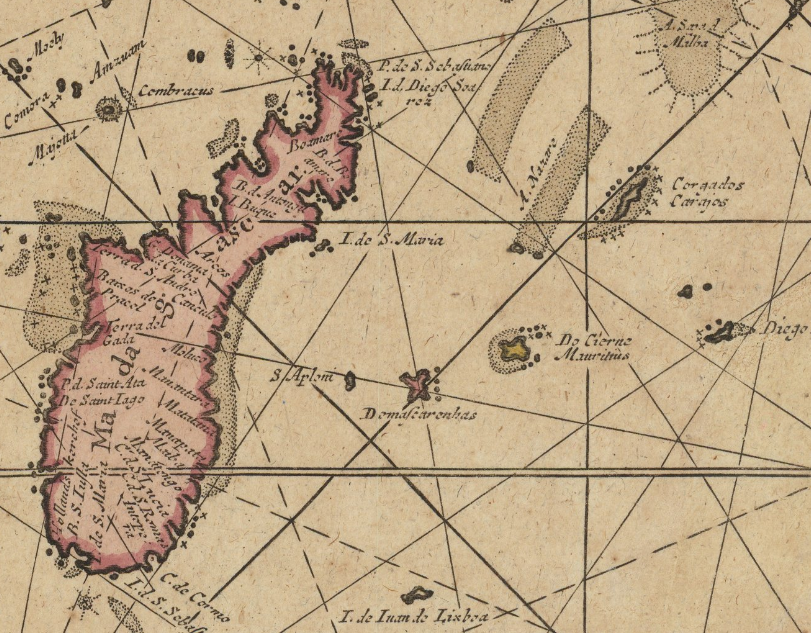
(cont’d…) The Barklys’ owned a sugar plantation in Guyana called Highbury and received compensation from the British government when slavery was abolished in the United Kingdom in 1834. According to Alison, Aeneas Barkly and his partner received the biggest single pay-out from the £20 million the British government’s compensation payments. Sir Henry Barkly also received compensation. See below for Alison’s statement:
If your ancestors were involved in the trafficking and enslavement of Africans — in Mauritius, Guyana, or elsewhere — please reach out. We want to hear your story. We also encourage you to send, share, or ask for educational resources (books! scholars!), and preferred local charities.
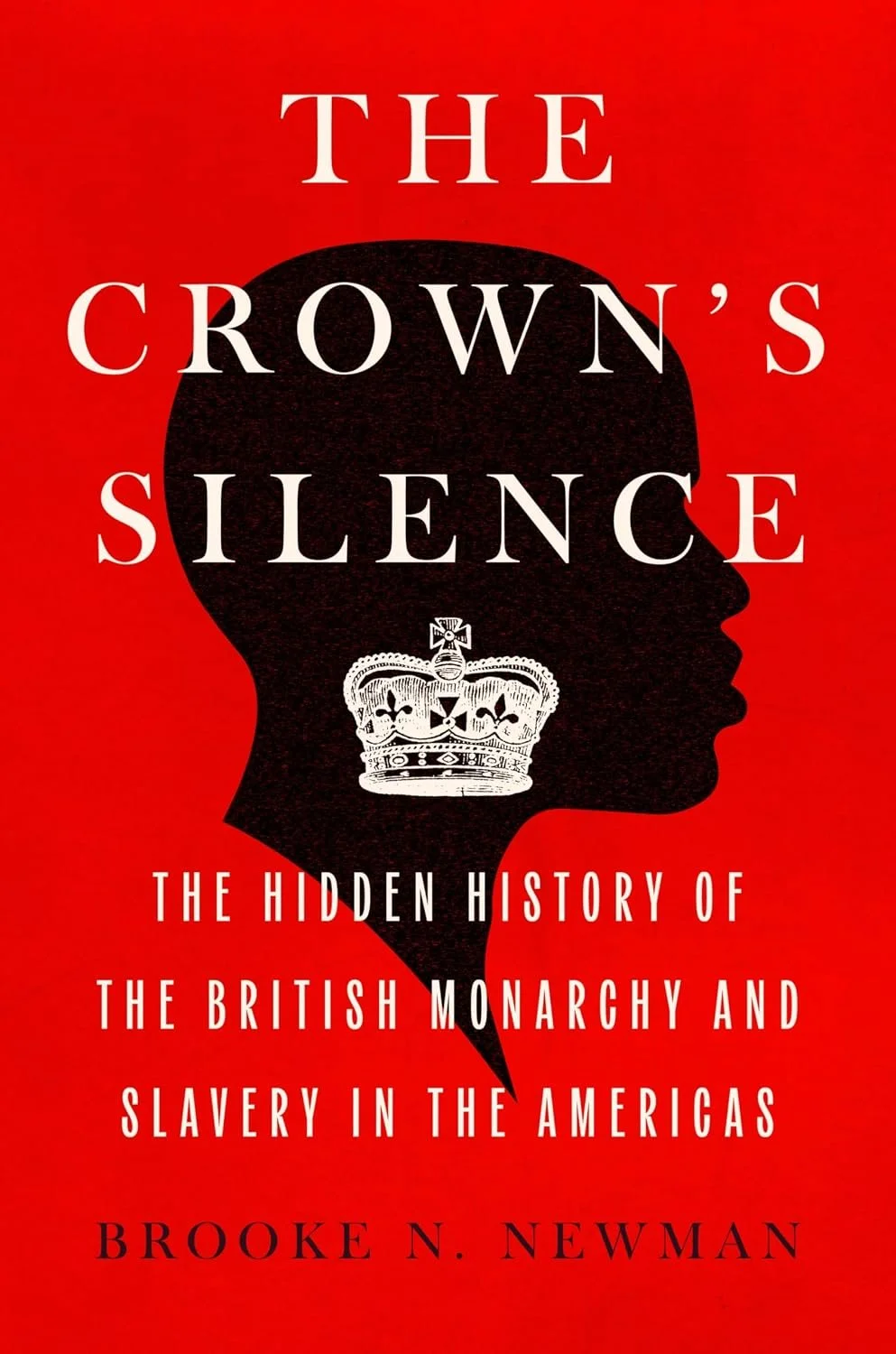
Book review: ‘Slavery was not peripheral to royal power; it was foundational’.
The Crown’s Silence: The Hidden History of Slavery and the British Monarchy by Brooke Newman (HarperCollins, UK and USA)
Britain’s Slave Traders: A Forgotten History by William A Pettigrew (Bodley Head)
In the UK this year the focus of the debate about reparative justice has been largely on King Charles. Jamaica has led Caribbean countries in asking him, as their head of state, to address the crimes and legacies of transatlantic chattel slavery through legal mechanisms like the Privy Council. (For more, see Claudio Mecklenburgh's report about Heirs of Slavery's engagement with a delegation led by Jamaica's Culture Minister in September.)
But the demands on the King have become much more personal, with two important new books scrutinising the origins of the Royal Family's enormous private wealth.. The American historian Brooke Newman went back through the archives to detail generations of private and public investment in slave trading companies by British monarchs from Charles II onwards.
As she points out in her The Crown's Silence , published in January, this was no secret. 'Enslaved women, men and children were literally branded with royal insignia – initials and crowns – marking the monarchy’s direct involvement.'
Professor Newman makes the important point that by the eighteenth century, British kings were using the nation's army and navy to protect and bolster these personal investments. The private and public roles of the monarchy merged: in the early 19th century the Crown bought 13,000 enslaved Africans to become soldiers in the West Indies protecting the colonies and the plantations. This begs the question, not for the first time, of why state reparations and the royal family's personal obligations should be separate issues.
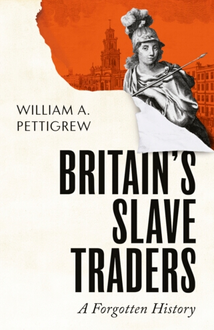
Will Pettigrew's Britain's Slave Traders gives the fullest picture yet of the extraordinary extent of human trafficking industry, and the way it reached into all corners of British society over the 300 years of legal transatlantic enslavement. Professor Pettigrew has worked with University College London's Legacies of British Slavery project, and his exploration of the archives reveals just how much of this history Britain as a society has chosen to suppress or ignore.
13,000 British investors were behind the transportation of 3.3 million Africans to the Americas, with British ships responsible for 90% of the voyages - numbers only exceeded by the Portuguese.
A succession of British monarchs were among the backers. Hence the name of the first British slave trading corporation, set up as a monopoly in the 17th century: the Royal African Company. What will King Charles do? He commissioned research three years ago into his ancestors' involvement in transatlantic slavery, and the results of that are due to be delivered in 2027. Until then we are left with his assurance of his 'personal sorrow' at the history.” - Alex Renton
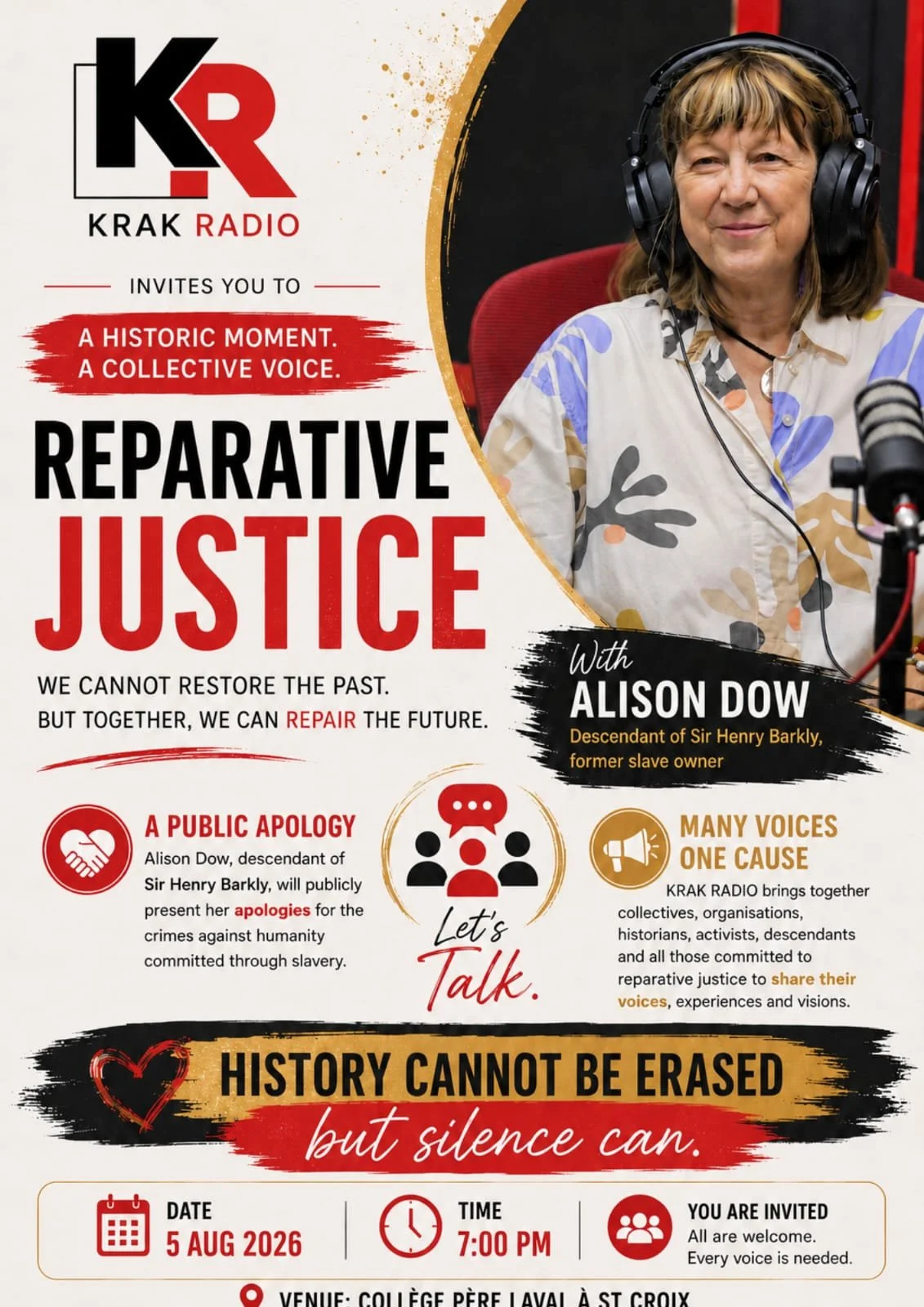
Dr. Alison Dow, a descendant of Sir Henry Barkly, is acknowledging that slavery’s legacy lives on today. A former General Practitioner, Alison has lived and worked in Zambia, South Africa, Scotland, and England.
Experiences that have shaped her lifelong engagement with social justice, anti-apartheid activism, and the global legacies of colonial rule.
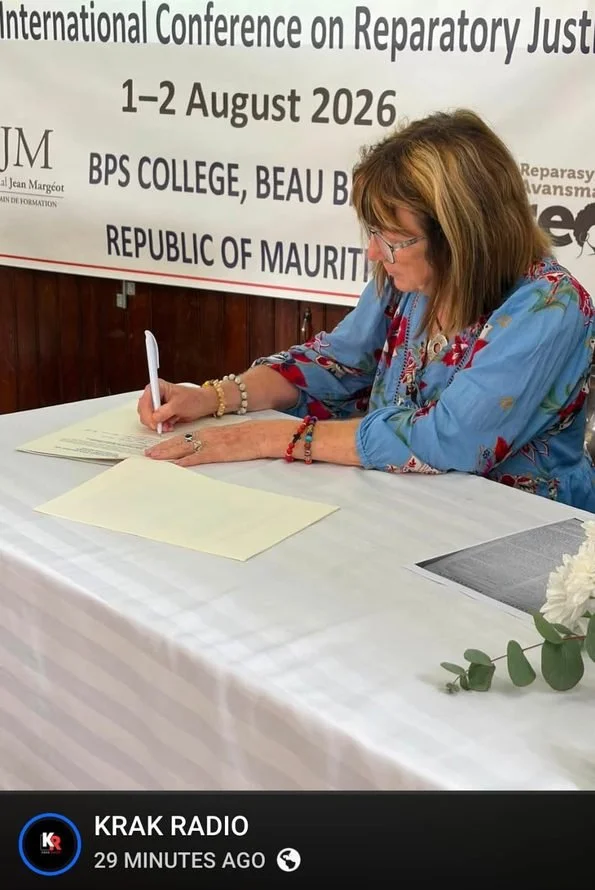
At an event — organised by KRAK and supported by KRAK Radio, led by José Moirt — Alison signed the Accra-Le Morne Declaration for Reparatory Justice: The Indian Ocean Manifesto. If you’d like a copy, reach out to contactus@heirsofslavery.org.
The following statement is a summary of multiple speeches Alison gave throughout her visit:
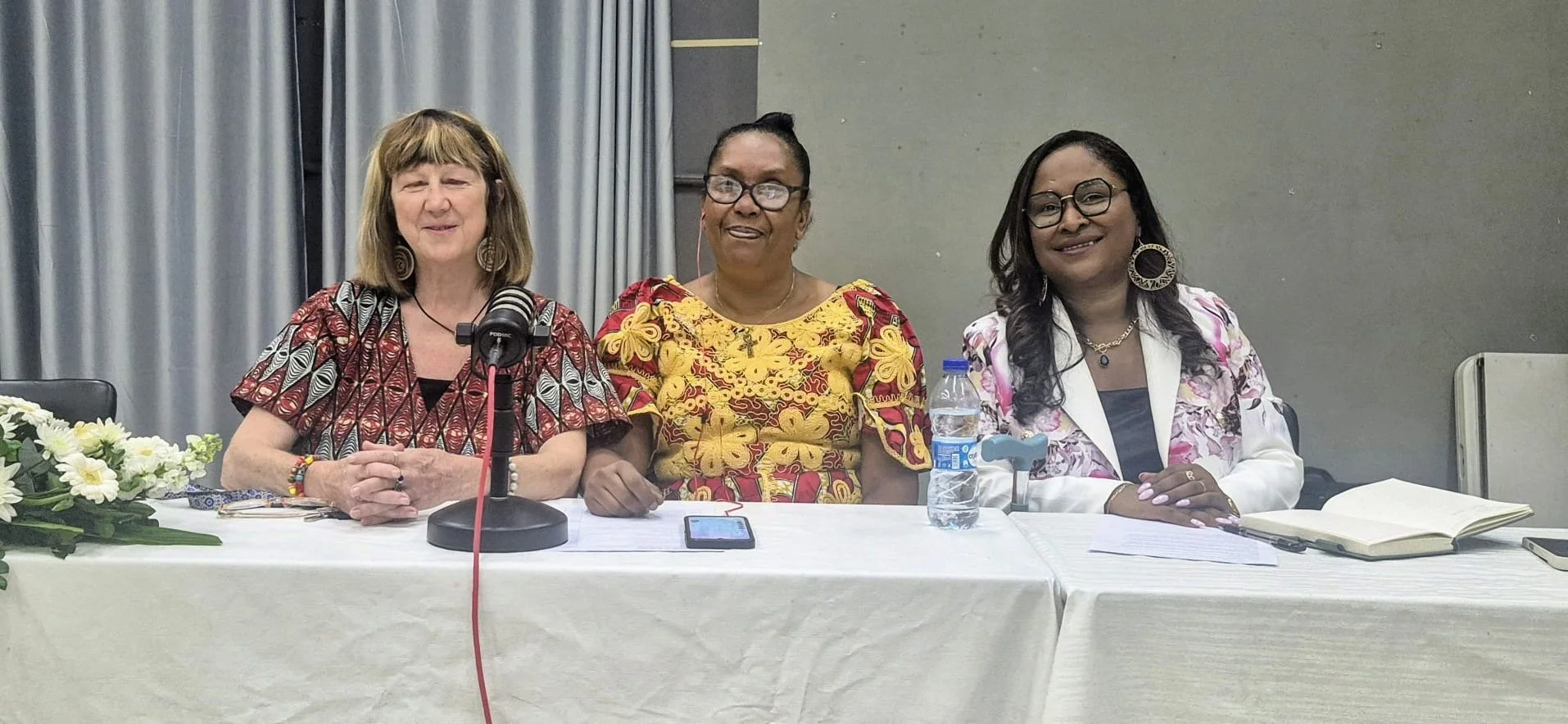
left to right: Alison Dow, Elena Rioux, Rebecca Jeanneton Marthe
Two years ago, on my second visit to Mauritius, I decided to look for the footprint of my ancestor Sir Henry Barkly here on the island. I had known about Henry Barkly since I was a child as my grandmother Mona Macmillan wrote his biography published in 1970.
I found several streets named after him. I was told most emphatically the area called Cité Barkly, named after him, was not safe. “Even the police don’t go there.”
Last night I was so very warmly welcomed at Cité Barkly in Mauritius, with a reception held in my honour. I was shown around the incredible Centre of Learning which runs an Educational Community Development Programme. I was genuinely impressed with the buildings and its achievements and its staff. I then was honoured to give keynote speech at the Barkly Youth Centre. I must thank everyone I met in Barkly. The people who live in this social housing area are all Kreol. They are very proud of their community and were so very warmly welcoming.
I heard so often these words during my stay: “This is the first time that since Independence in 1968 that anyone from Britain has come to visit ‘the people of Mauritius.’”
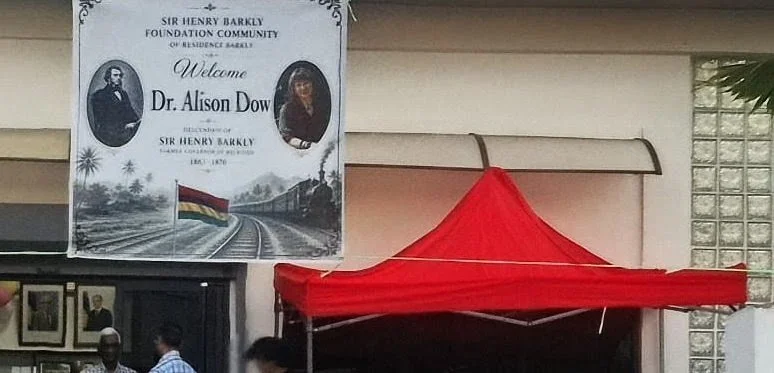
upon arriving at Cité Barkly, this banner greeted Alison.
I understand that Cité Barkly is named after my ancestral uncle, Sir Henry Barkly. He was Mauritus’ colonial governor from 1863 to 1870. For lots of reasons, he has quite a significant
footprint on the island. The Barkly family — of Sir Henry Barkly and his father Aeneas Barkly — benefited financially from the ownership of a sugar plantation in Guyana called Highbury, which was made profitable from the labour of enslaved Africans. They also benefited from compensation monies received from the British Government when slavery was abolished in 1834.
[Editor’s note: You can find out if your ancestors received compensation by clicking this link.]
Aeneas Barkly and his partner Davidson received the biggest single pay out from the £20m the British government’s compensation payments. Aeneas’ son Sir Henry also received compensation.
I acknowledge my ancestor’s role in this crime against humanity, and I am here to apologise for all the immense suffering that was caused directly to those they enslaved and their descendants.
Why is what I am saying relevant to Cité Barkly?
It is relevant because we know that the legacy of the Mauritian slavery economy can be seen everywhere still today in Mauritius. All the deep inequities that we see today that affect the Kreol community are as a direct result of what happened in history when the control of the nation’s economy was in the hands of white plantation owners. I am here to listen, to understand, and most importantly move forward together on this journey of reparative justice.
I am a retired clinician but these days I spend my time giving talks all over the U.K. on the legacy of empire, specifically on the abolition of slavery in the British empire. It’s astonishing the general lack of awareness the British public have of the role their huge empire (the biggest the world has ever seen) played in the brutal chattel-based slave industry. The deep roots of racism that are playing out today daily in British streets and British media started with the Barbados code of 1661. This is similar to the code noir of France of 1685. These both codified black enslaved Africans as private property.
But still, I hear these words all the time: “ I just did not know,” “I just did not know.”
We move onto the First Peoples of Mauritius — the First Nation peoples. Careful research into the early history of Mauritius shows quite clearly that the first peoples of this country are the Maroons. They have been on the island consistently since 1638; tenacious resilient peoples who survived burnings and beheadings. We must applaud them and we must give them special recognition as the MAURITIAN FIRST NATION PEOPLES; as, for example, those in New Zealand receive.
I will move onto some words about generational and ancestral trauma.
My grandfather Professor W. M. Macmillan was a South African academic and journalist. He campaigned for the British government to develop the colonies, not just extract commodities. He campaigned for autonomy. He wrote a seminal book in 1938 called ‘Emergent Africa’ focusing on social economic and political development — or actually the lack of it. He also wrote a book in the 1930s, after an extensive tour of the islands: ‘Warning from the West Indies’. These haunting words — written 100 years after the abolition of slavery — have stayed with me. They point at the destruction of the family and also at the abuse of women which was a huge part the slavery economy:
‘’The most catastrophic loss is the destruction of the family. 70 percent of children are born to single-parent families. Women have three or four children by different fathers. There is child neglect as mothers are out all day working long hours earning a meagre wage…’’
As a clinician I spent most of my working life delivering care to the most deprived areas of London with large numbers of Afro-Caribbean residents — descendants of enslaved Africans all living in social housing areas just like Cité Barkly. The slavery industry destroyed family structure as well as language and family names and so much more. The issues that my grandfather described 100 years after slavery was abolished are with us today, 200 years after the abolition of slavery.
In Britain, young black men have the worst mental health and higher suicide rates than any comparable group. I have witnessed this first-hand. The palpable anger and desperation. I have also worked with refugee families fleeing persecution, rape, and violence. The trauma they experience of losing everything is, again, palpable and real. I also want to recognise their resilience.
Resilience and tenacious are the words I want to end on. Let’s move forward hand in hand and with a tenacious hold on the narrative. Thank you.” — Alison Dow

Copyright (C) 2026 HEIRS OF SLAVERY. All rights reserved.